Top Improvements You Can Make to Your Commercial Business in 2026
Introduction
As 2026 approaches, commercial businesses are operating in an environment shaped by constant change. Labor shortages continue to pressure productivity. Customers expect faster service and greater transparency. Regulators are more attentive, insurers are more selective, and operating costs remain unpredictable. In this climate, standing still is no longer neutral—it’s a competitive disadvantage.
The most successful organizations are not reacting to problems as they arise. Instead, they are deliberately improving systems, infrastructure, and processes before those weaknesses become expensive failures. These improvements are not about dramatic reinvention. They are about strengthening the fundamentals that allow a business to operate efficiently, scale responsibly, and adapt quickly.
This article explores the most valuable improvements commercial businesses can make in 2026. Each section focuses on practical, achievable upgrades that can be implemented without disrupting core operations. Whether your goal is to increase efficiency, reduce risk, improve employee performance, or strengthen your brand, the ideas below are designed to help you make smarter decisions and avoid common missteps.
Standardize Your Brand Touchpoints to Look More Professional at Scale

As organizations grow, inconsistencies tend to emerge organically. Different teams adopt different standards. New hires bring expectations from previous employers. Over time, the outward appearance of the business becomes fragmented, even if leadership believes things are “mostly consistent.”
This fragmentation has real consequences. Customers subconsciously assess professionalism based on visual cues. A disorganized appearance can create doubt, even when the work itself is excellent.
Using custom embroidery services is one way businesses bring visual consistency back under control. Branded apparel serves as both a functional uniform and a branding tool, especially in environments where employees interact with customers, vendors, or the public.
Standardization supports more than just aesthetics. It creates clarity.
Benefits of standardized apparel include:
-
Immediate visual identification of employees versus visitors
-
Reinforcement of safety protocols through role-specific attire
-
Stronger sense of belonging among team members
-
Reduced friction during onboarding
To implement this effectively, businesses should think beyond simply adding logos. The goal is to build a system.
Best practices include:
-
Defining apparel standards by role rather than department
-
Selecting garments appropriate for climate, physical demands, and safety requirements
-
Establishing replacement schedules to avoid worn or mismatched items
-
Creating written guidelines so consistency survives leadership changes
In 2026, professionalism is communicated visually long before a conversation begins. Standardized branding helps ensure that message is intentional and positive.
Build a Smarter Maintenance and Deep-Cleaning Strategy
Maintenance strategies often fall into two extremes: over-servicing equipment “just in case” or under-servicing until something breaks. Neither approach is efficient. Both create unnecessary costs.
Modern businesses are moving toward condition-based and preventive maintenance strategies that rely on targeted intervention rather than blanket schedules.
Partnering with a dry ice blasting company supports this approach by enabling deep cleaning that is both effective and non-destructive. Because dry ice sublimates on contact, it removes buildup without introducing moisture, chemicals, or abrasion.
This matters because many failures begin with contamination:
-
Dust buildup traps heat
-
Grease accumulation accelerates wear
-
Residue interferes with sensors and controls
Industries where this approach is particularly valuable include:
-
Manufacturing and fabrication
-
Food and beverage processing
-
Power generation and utilities
-
Facilities with sensitive electrical systems
To maximize return on this type of service:
-
Identify assets with the highest replacement cost
-
Focus on equipment tied directly to production uptime
-
Track performance improvements after cleaning
-
Incorporate results into long-term asset planning
In 2026, maintenance is no longer about fixing problems—it’s about preventing disruption before it starts.
Improve Day-to-Day Visibility Into Operations and Output
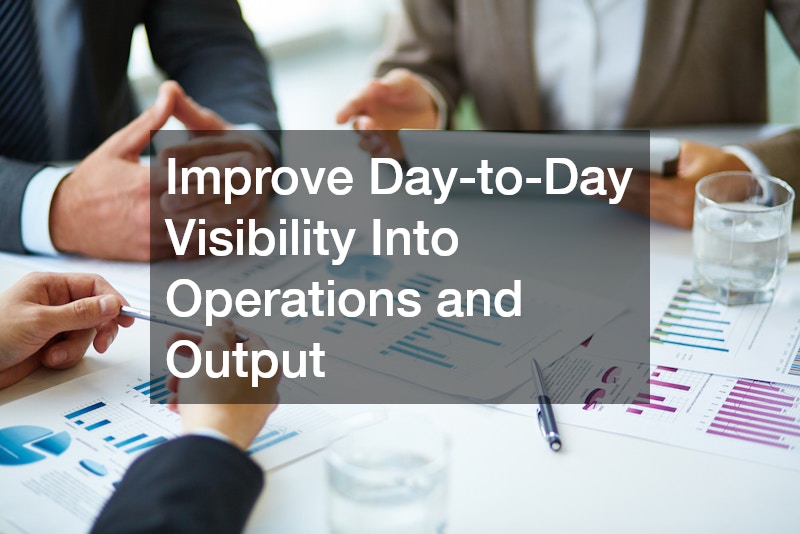
Many businesses believe they understand how their operations perform, but that understanding is often delayed, incomplete, or filtered through layers of reporting. By the time an issue appears in a weekly or monthly report, the opportunity to correct it efficiently has passed.
Production monitors solve this problem by making performance visible in real time. When output, downtime, and workflow metrics are displayed where work happens, teams respond faster and more effectively.
Visibility changes behavior. When employees can see how their work contributes to overall performance, engagement increases. When managers can spot patterns early, small adjustments prevent larger disruptions.
Effective use of visibility tools requires restraint and intention.
Best practices include:
-
Limiting displays to the most actionable metrics
-
Using simple visual indicators for quick interpretation
-
Updating data automatically to maintain trust
-
Reviewing performance consistently during shift changes
Common mistakes to avoid:
-
Displaying too many metrics at once
-
Using data as a punitive tool rather than a coaching aid
-
Failing to explain what the numbers actually mean
In 2026, operational visibility is not about surveillance. It’s about alignment, clarity, and shared accountability.
Create a Responsible Plan for Retiring Old Equipment and Technology
Technology upgrades are often treated as exciting milestones. Technology retirement, on the other hand, is frequently ignored. As a result, outdated equipment accumulates quietly in storage rooms, closets, and unused offices.
This creates hidden risks. Old devices may still contain sensitive data. Unsupported hardware can complicate audits. Cluttered storage spaces reduce efficiency and increase liability.
Electronic recycling provides a responsible and structured solution, but only when it is part of a defined process rather than a one-time cleanup.
Items commonly overlooked include:
-
Decommissioned servers
-
Outdated networking equipment
-
Broken or obsolete peripherals
-
Industrial electronics no longer supported by manufacturers
A mature retirement strategy includes:
-
Defined lifecycle expectations for different equipment types
-
Clear ownership of the retirement process
-
Documentation of disposal methods
-
Coordination with IT, compliance, and facilities teams
By normalizing equipment retirement, businesses reduce risk while reinforcing sustainability and accountability.
Upgrade Exterior Spaces to Improve First Impressions and Employee Morale
The exterior of a commercial property communicates far more than many leaders realize. Before customers interact with staff or experience service quality, they form impressions based on the building and surrounding environment.
Commercial outdoor planters are one of the most flexible ways to elevate exterior spaces without major renovation. They introduce natural elements that soften hard surfaces and signal care and intentionality.
Beyond customer perception, exterior improvements influence employees. People who feel proud of their workplace environment tend to be more engaged and respectful of the space.
Effective exterior upgrades should balance aesthetics with practicality.
Considerations include:
-
Choosing materials that withstand weather and wear
-
Selecting plants that match maintenance capacity
-
Designing layouts that do not interfere with access or safety
-
Refreshing elements seasonally to avoid stagnation
In 2026, exterior spaces are extensions of the brand, not afterthoughts.
Prepare Your Property and Infrastructure for Expansion and Repairs
Growth often reveals limitations that were invisible during earlier stages. Utility capacity, drainage, access points, and foundational support can all become constraints if they are not addressed proactively.
Engaging an excavating contractor early allows businesses to understand what is possible before expansion becomes urgent. This foresight prevents rushed decisions and inflated costs.
Common triggers for excavation planning include:
-
Facility additions
-
Parking or traffic flow changes
-
Utility upgrades
-
Stormwater management improvements
Proactive planning steps:
-
Conduct site assessments before finalizing growth plans
-
Coordinate with local authorities early
-
Align construction timelines with operational needs
-
Build contingency allowances into budgets
Preparing infrastructure ahead of demand allows growth to proceed smoothly instead of reactively.
Strengthen Fire Readiness and Utility Risk Planning
Fire risk has become a growing concern across industries. Aging infrastructure, environmental conditions, and regulatory scrutiny have raised expectations for preparedness and prevention.
Utility fire mitigation planning focuses on identifying and reducing risks associated with power lines, substations, and related infrastructure that could trigger fires or service disruptions.
Effective plans typically include:
-
Assessment of utility-related vulnerabilities
-
Vegetation and clearance management strategies
-
Coordination with utility providers and emergency services
-
Documentation for insurers and regulators
Beyond safety, these plans protect continuity. Businesses that can demonstrate preparedness often experience fewer insurance challenges and faster recovery after incidents.
In 2026, fire readiness is as much about planning and documentation as it is about physical safeguards.
Outsource Cleaning Strategically to Free Up Internal Resources
As operations expand, cleaning responsibilities often fall to employees by default rather than design. What may start as a temporary solution quickly becomes embedded in daily routines. Staff members clean between tasks, managers step in when standards slip, and accountability becomes informal. Over time, this approach diverts attention from revenue-generating work, creates inconsistency, and can even lead to friction among teams.
Engaging a professional cleaning company allows businesses to regain control over cleanliness without pulling internal talent away from higher-value responsibilities. More importantly, it introduces structure. Cleaning becomes a defined service with expectations, schedules, and measurable outcomes rather than an afterthought handled “when there’s time.”
Strategic outsourcing offers several operational advantages beyond surface-level appearance:
-
Consistent service levels across all areas of the facility, regardless of shift or workload
-
Predictable scheduling that aligns with production, office hours, or customer traffic
-
Reduced labor strain by removing non-core tasks from employee responsibilities
-
Improved health and safety outcomes through standardized processes and proper equipment
Consistency is one of the most overlooked benefits. Internal cleaning often fluctuates depending on staffing levels, morale, or workload. A structured service ensures the same standards are met daily, even during peak periods or staff transitions.
To ensure success, businesses should approach outsourcing with the same discipline they apply to other vendors:
-
Define service expectations clearly, including frequency, scope, and quality benchmarks
-
Align cleaning schedules with operational realities to avoid disruptions
-
Establish accountability through checklists, reporting, or periodic inspections
-
Reassess scope as the business evolves, expands, or changes usage patterns
It’s also important to recognize that cleanliness directly affects more than appearance. Well-maintained environments reduce slip hazards, improve air quality, protect equipment, and contribute to employee morale. In customer-facing settings, cleanliness influences trust before a single interaction occurs.
Clean environments support productivity, safety, and professionalism, making cleaning strategy an operational decision rather than a cosmetic one.
Invest in Performance Testing and Training Accuracy

Improvement requires measurement. When performance is estimated rather than measured, training and optimization efforts lose credibility. Employees sense when evaluations are subjective, and managers struggle to justify decisions without objective data. Over time, this erodes trust in improvement initiatives.
Laser timing gates provide precise data that supports objective evaluation across a wide range of applications, from physical training to process optimization. Their value lies in removing guesswork and replacing assumptions with measurable insight.
In business environments, precision timing is useful wherever speed, consistency, or efficiency matters. Small delays often compound into significant losses when repeated hundreds or thousands of times.
Business use cases include:
-
Measuring task completion times to identify bottlenecks
-
Evaluating training program effectiveness over time
-
Testing equipment performance under different conditions
-
Supporting quality assurance documentation and audits
The true value lies not in collecting data, but in applying it thoughtfully. Precision tools can quickly become counterproductive if they are used to micromanage or penalize rather than improve.
Best practices for effective implementation include:
-
Define clear performance benchmarks before measuring anything
-
Use data to support coaching, not punishment
-
Review results regularly to identify trends, not isolated incidents
-
Integrate findings into broader improvement initiatives
When employees understand that data is being used to improve systems rather than assign blame, adoption increases significantly. Teams are more likely to engage when measurement is framed as a tool for fairness and consistency.
In 2026, precision measurement supports smarter decisions, better training outcomes, and continuous improvement that employees can trust.
Align All Improvements With Long-Term Financial Strategy
Operational improvements only succeed when they are financially sustainable. Even high-value upgrades can create strain if they are poorly timed, improperly scoped, or disconnected from broader financial planning. Many businesses struggle not because they invested, but because they invested without a framework.
Working with a financial advisor helps businesses evaluate improvements through a long-term lens, balancing opportunity with stability. This perspective is especially important when multiple upgrades are planned across departments or locations.
Rather than evaluating improvements in isolation, strategic financial planning looks at how investments interact with cash flow, reserves, and growth goals.
Key considerations include:
-
Phasing projects to protect cash flow and avoid capital shocks
-
Evaluating total cost of ownership, not just upfront expense
-
Prioritizing investments with measurable and realistic returns
-
Maintaining flexibility for unexpected challenges or market shifts
Financial alignment also helps prevent a common pitfall: overcommitting to improvements during strong periods without accounting for future volatility. A disciplined strategy ensures that upgrades strengthen the business rather than constrain it.
When financial strategy and operational planning are aligned, improvements become assets rather than liabilities. They support growth, absorb risk, and create a foundation that allows businesses to adapt confidently as conditions change.
Conclusion
Improving your commercial business in 2026 is not about making the most changes—it’s about making the right ones. Thoughtful improvements strengthen operations, reduce risk, and create conditions for sustainable growth. When upgrades are planned intentionally and executed strategically, they compound over time, positioning businesses to adapt and lead rather than react.
The strongest organizations approach improvement as an ongoing process. They evaluate honestly, invest wisely, and remain disciplined in execution. By focusing on fundamentals such as efficiency, preparedness, and professionalism, businesses can move into 2026 with confidence, clarity, and momentum.