

It’s easy to assume that the systems keeping your property running—roofs, HVAC units, plumbing, doors, and structural elements—will simply keep working until something visibly breaks. But by the time a system fails outright, you’re often facing higher repair costs, safety risks, and disruption that could have been avoided with consistent attention. The real challenge isn’t knowing that maintenance matters; it’s building the discipline to act on small warning signs before they become expensive emergencies.
This article breaks down how to think about proactive upkeep across every major system on your property.
Why Small Maintenance Habits Prevent Big Failures
Most catastrophic failures in a home don’t happen overnight. A water heater that bursts, a roof that starts leaking, or an HVAC system that dies in the middle of summer usually gives warning signs for months, sometimes years, before the actual breakdown. A little rust around a fitting, a faint musty smell, and a furnace that cycles more often than it used to are the small, unglamorous clues that get overlooked because nothing seems urgent yet. The discipline of maintenance isn’t about reacting to those clues once they become obvious; it’s about noticing them early, when the fix is still a five-minute adjustment instead of a five-thousand-dollar replacement.
This is why small, consistent habits matter more than occasional deep inspections. Checking your water heater’s pressure relief valve twice a year, cleaning gutters before the rainy season, replacing HVAC filters on a set schedule, and testing smoke detectors monthly are all tasks that take a few minutes but quietly prevent the conditions that lead to failure. The value isn’t just in doing the task; it’s in doing it on a schedule you actually stick to, rather than whenever you happen to remember. A furnace filter changed every three months keeps strain off the system all year, while one that’s forgotten for a year can cause the unit to overheat and shut down entirely.
The same logic applies to caulking around windows, checking for slow leaks under sinks, or inspecting attic insulation for moisture. None of these are dramatic actions, but skipping them repeatedly is exactly how small, cheap problems turn into expensive emergencies that disrupt your home and your budget at the worst possible time.
Building a Maintenance Schedule You Will Actually Follow

The reason most maintenance schedules fail is that they are built around good intentions instead of real habits. A checklist taped inside a cabinet is easy to ignore, but a task linked to something you already do regularly is much harder to skip. Rather than creating one long annual list that feels overwhelming, break maintenance into small, predictable chunks tied to the calendar or to routines you already have, like paying bills or changing the clocks for daylight saving time. The goal is to make upkeep so automatic that it no longer feels like a decision you have to make each time.
Start by sorting tasks into how often they truly need attention, then attach each group to a trigger you will not forget. Keep the list short enough that it feels achievable, and track completion somewhere visible so skipped tasks are obvious rather than easy to forget.
- Monthly: check HVAC filters, test smoke and carbon monoxide detectors, run water through rarely used drains
- Seasonal: clean gutters, inspect weatherstripping, service outdoor equipment before storage
- Annual: flush the water heater, inspect the roof and attic, check the foundation for new cracks
- As needed: replace batteries, address minor leaks or squeaks before they grow
Writing the schedule down is only half the job. Reviewing it at the same time each year, and adjusting based on what actually broke or wore out, turns the plan into something that reflects your home rather than a generic template.
Structural Integrity: Foundations, Framing, and Reinforcement
Structural components rarely announce their decline with a single dramatic event. Instead, they whisper through hairline cracks in a foundation wall, a slight give in a floor joist, or rust bleeding through concrete where rebar sits too close to the surface. Rebar itself is meant to give concrete tensile strength, but when moisture penetrates and corrodes it, the metal expands and cracks the very material it was meant to reinforce. That process can take years to become visible, which is exactly why waiting for obvious damage before inspecting a foundation or crawl space is a losing strategy.
The same logic applies above ground: a roof deck that flexes underfoot or shingles that curl at the edges are early warnings that framing or sheathing beneath is absorbing moisture it shouldn’t be. Many homeowners only think to call commercial roofing contractors or residential specialists after a leak has already stained a ceiling, but by then the framing has often been wet for months.
A disciplined approach to structural upkeep means treating small, boring checks as non-negotiable rather than optional. Set a seasonal rhythm and stick to it, because consistency catches problems while they’re still cheap and simple to correct.
- Walk the foundation perimeter twice a year looking for new cracks, bowing, or gaps around window wells
- Check exposed framing in basements, attics, and crawl spaces for discoloration, soft spots, or a musty smell
- Inspect the roofline after major storms for missing shingles, sagging sections, or granule buildup in gutters
- Test doors and windows for sticking or misalignment, which can signal shifting in the frame
- Keep drainage and grading sloped away from the foundation, so water never has a reason to linger
Mechanical Systems That Need Regular Attention
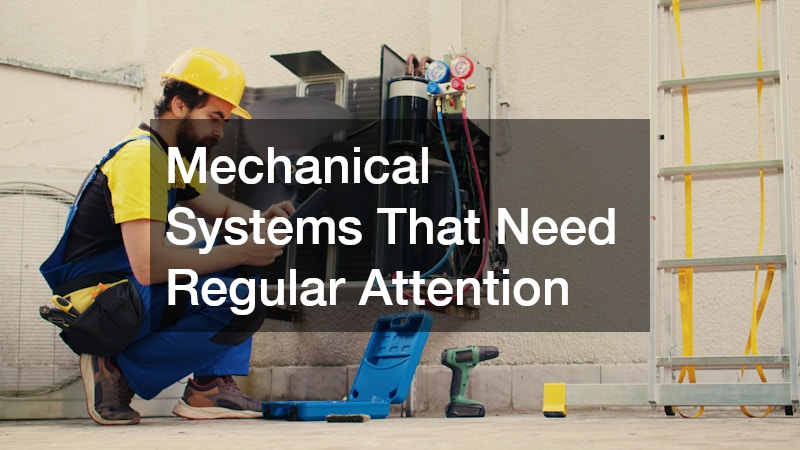
Heating and cooling systems rarely announce their decline with a single dramatic failure. Instead, they send small signals for months: a slightly weaker airflow, a filter that clogs faster than it used to, a strange hum during startup, that get ignored because the system still technically works. This is the trap of mechanical maintenance: everything appears fine until the compressor seizes in July or the furnace quits during the first hard freeze.
Replacing an air filter every one to three months, keeping outdoor condenser units clear of leaves and debris, and having ductwork checked for leaks are small habits that prevent the buildup of strain that eventually causes a breakdown. Even property owners who manage larger buildings often notice that the businesses relying on commercial HVAC companies for scheduled inspections tend to avoid the costly emergency repairs that catch everyone else off guard, simply because problems get caught while they are still minor and inexpensive.
Water heaters, sump pumps, and garage door mechanisms follow the same pattern of quiet warning signs before sudden failure. Sediment builds up in a water heater tank year after year, reducing efficiency and shortening its lifespan, yet the only visible symptom might be water that takes a little longer to heat. A sump pump that hasn’t been tested in a year may fail the exact moment a storm floods the basement, precisely when it’s needed most. Garage door springs and cables wear gradually from thousands of open-close cycles, and the first sign of trouble is sometimes a door that slams shut unexpectedly.
None of these systems demand constant attention, but they do require a recurring check; once or twice a year is often enough to catch wear before it becomes a failure. The discipline isn’t about obsessing over mechanical systems; it’s about building a rhythm of brief, periodic checks so small issues get addressed while they’re still small.
Underground and Waste Management Systems
Septic systems and underground utility lines fail quietly, which is exactly what makes them dangerous to neglect. A drain field can be absorbing wastewater improperly for months before soggy patches, sluggish drains, or foul odors near the tank finally tip you off, and by that point you may be looking at a full field replacement instead of a simple pump-out. The same pattern applies to businesses on a larger scale, where regular commercial septic pumping keeps grease, solids, and sludge from overwhelming a system that has far less margin for error than a typical residential setup. Waiting for a backup to force action almost always costs more than staying ahead of the schedule, both in repair bills and in the disruption of not being able to use your plumbing at all.
The discipline here is mostly about tracking time and paying attention to subtle changes, since underground systems do not offer visual reminders the way an aging roof or a cracked driveway might. Keeping a simple log of pump-out dates, inspection notes, and any unusual smells or slow drains gives you an early warning system that most homeowners never bother to set up.
- Have septic tanks inspected every one to three years and pumped based on household size and usage, not guesswork
- Watch for slow drains, gurgling pipes, or standing water over the drain field as early warning signs
- Keep tree roots and heavy vehicles away from buried lines and tanks to prevent structural damage
- Avoid flushing wipes, grease, or chemicals that accelerate sludge buildup
- Locate and label cleanout access points so problems can be checked quickly instead of guessed at
Access Points and Entryway Systems

Doors take more abuse than almost any other system in a building, yet they rarely get attention until they stick, sag, or stop closing altogether. The warning signs show up early: a hinge that squeaks, a door that drags across the threshold, weatherstripping that has gone flat and brittle, or a closer arm that slams the door instead of easing it shut. Each of these is a small mechanical complaint asking for lubrication, a tightened screw, or a minor adjustment. Left alone, that dragging door stresses the frame, the frame shifts, and eventually the whole unit binds or the latch stops aligning with the strike plate. For homeowners, a five-minute check each season, tightening hinge screws, wiping down tracks, testing that the door closes and locks smoothly, catches most problems before they become structural.
Entry systems with automatic closers, keypads, or heavier commercial-grade hardware demand a bit more vigilance because the components interact. A closer set too aggressively can rack a frame over time, and a misaligned sensor on an automatic door can mask a bigger issue with the track or motor. If you manage a storefront, rental property, or shared entryway, it helps to know that commercial door repair often starts with the same overlooked basics as a home door: loose fasteners, worn weatherseals, and hinges that were never adjusted after seasonal shifts in the frame.
Catching those issues while they are still cosmetic annoyances, rather than waiting until the door won’t latch or a panel warps, keeps repair costs low and protects the security the door is meant to provide in the first place. Discipline here simply means treating a squeak or a drag as information, not background noise.
Exterior Property Elements: Visibility and Safety
The parts of your property that face the street are easy to take for granted because they seem to just sit there quietly doing their job, until a burned-out bulb, a faded sign, or a cracked walkway suddenly becomes a liability. Business signs, for example, rely on consistent lighting and structural soundness to communicate that a property is active and cared for; when letters go dark, or panels start sagging, it signals neglect long before anything actually breaks.
The same discipline applies to smaller details like driveway markings, gate arms, and traffic control devices on shared or commercial properties, which are only useful if they remain visible, properly angled, and unobstructed by growth or debris. Waiting until someone gets hurt or lost to address these issues turns a simple maintenance task into a liability problem.
A regular walk-around, done seasonally or even monthly for busier properties, catches most of these issues before they escalate. During that walk-around, it helps to check for specific warning signs rather than just glancing at the property in passing.
Specific things worth checking include:
- Outdoor lighting fixtures for flickering, dimming, or complete outages near entrances and walkways
- Signage for fading, loose mounting hardware, or obscured visibility from tree growth
- Painted lines, curb markings, or reflective devices that have worn thin or disappeared
- Walkways, steps, and ramps for cracks, uneven settling, or standing water
- Fencing, gates, and barriers for rust, loose posts, or sagging sections
Addressing these items on a set schedule, rather than reacting only when something looks obviously wrong, keeps small wear-and-tear issues from turning into safety hazards or code violations that are far more expensive and disruptive to fix later.
Managing Debris and Material Cleanup
One of the quietest forms of maintenance discipline is simply keeping a property clear of accumulated debris before it becomes a hazard or a hiding spot for bigger problems. Old lumber, damaged fencing, broken appliances, and leftover renovation materials do more than clutter a yard; they trap moisture against siding and foundations, attract pests, and can obscure the early warning signs of rot or pest damage until repairs become far more expensive.
If you’re tackling a larger cleanup after a storm, a remodel, or years of putting off yard work, renting one of the roll off dumpsters available through most local waste haulers is often more practical than making dozens of trips to a disposal site, and it gives you a hard deadline that actually encourages the job to get finished instead of dragging on for months.
Sorting materials as you go is where the real discipline pays off. Setting aside metal items such as old gutters, pipes, appliance frames, and fencing for scrap metal recycling not only keeps them out of a landfill-bound dumpster but can also offset some of the cost of the cleanup, since many recycling centers pay by weight for common metals like steel, aluminum, and copper.
Treating this kind of cleanup as a recurring task rather than a one-time emergency response is what separates properties that stay ahead of deterioration from those that don’t; a yard or garage checked twice a year for buildup is far less likely to hide a leaking hose bib, a nesting rodent problem, or a rusted-through gas line fitting than one that only gets attention when it’s already an eyesore. The habit of clearing debris promptly is, in a sense, a small rehearsal for the bigger discipline of catching every failing system before it becomes a costly surprise.
When Heavy Equipment Becomes Part of Maintenance
Some maintenance tasks go beyond what a homeowner can handle with a ladder and a toolbox, and that is where heavy equipment quietly becomes part of a property’s upkeep routine. Replacing a rooftop HVAC unit, trimming a mature tree that has grown too close to power lines, or repairing a chimney on a steep-pitched roof often requires lifting capacity and stability that no amount of manual effort can substitute for.
When these moments arrive, arranging a crane rental for a single afternoon is frequently more practical and safer than attempting a workaround, and it prevents small maintenance windows from turning into drawn-out, risky projects. The discipline here is not about owning heavy machinery yourself, but about recognizing early that a task has outgrown basic tools and planning for the right equipment before the situation becomes urgent.
This kind of foresight matters because equipment access is not always immediate. Scheduling delays, permit requirements, or seasonal demand can push a rental or service appointment back by days or weeks, which is a problem if the underlying issue is actively worsening, like a leaning tree or a failing roof section. Property owners who stay disciplined about maintenance build in buffer time, checking on structural or mechanical concerns well before they become emergencies that force a rushed, more expensive equipment rental at the last minute.
It also helps to understand the basic scope of a job beforehand, since knowing whether a repair needs a bucket truck, a small crane, or simply scaffolding changes both the cost and the lead time involved. Treating heavy equipment as a normal, occasional part of home upkeep, rather than a sign that something has gone badly wrong, keeps larger maintenance tasks manageable and prevents deferred repairs from compounding into structural or safety hazards down the line.
Recognizing Warning Signs Before Systems Fail
Most system failures do not happen without warning. They send small signals for weeks or months beforehand, but those signals are easy to dismiss because they rarely interfere with daily life at first. A faint odor, a slight change in sound, a slower response time, or a minor spike in a utility bill can all seem trivial in isolation. The discipline lies in treating these small deviations as information rather than noise, and in checking on them promptly instead of waiting to see if they get worse on their own.
Learning to notice these early cues takes some familiarity with how your home’s systems behave when everything is working correctly, so you have a baseline to compare against. Once you know what normal looks and sounds like, changes become much easier to spot. Some of the most common early warning signs across household systems include:
- Unusual noises, such as banging, clicking, humming, or grinding that were not there before
- Changes in smell, including musty, burning, or chemical odors near appliances or vents
- Inconsistent performance, like water pressure that fluctuates, rooms that heat unevenly, or lights that flicker
- Unexplained increases in utility bills that suggest a system is working harder than it should
- Visible changes, such as moisture stains, rust, cracks, or discoloration around equipment or fixtures
When you notice one of these signs, resist the urge to assume it will resolve itself. Instead, take a moment to observe the pattern: does it happen at a specific time, under specific conditions, or consistently? Writing down what you notice, even briefly, helps you track whether a problem is getting worse and gives you something concrete to reference later. This small habit of paying attention and documenting change is often the difference between a minor adjustment and a major, costly breakdown.
Final Thoughts
Maintaining a property isn’t about reacting to problems as they arise—it’s about developing the consistent habits that catch small issues before they escalate. Start by walking through your own property with fresh eyes, noting which systems haven’t been inspected recently, and building a realistic schedule you can stick to. The discipline you invest now will save you from far costlier surprises down the road.